

Lyophilization in Animal Health: Boosting Stability and Therapeutic Compliance
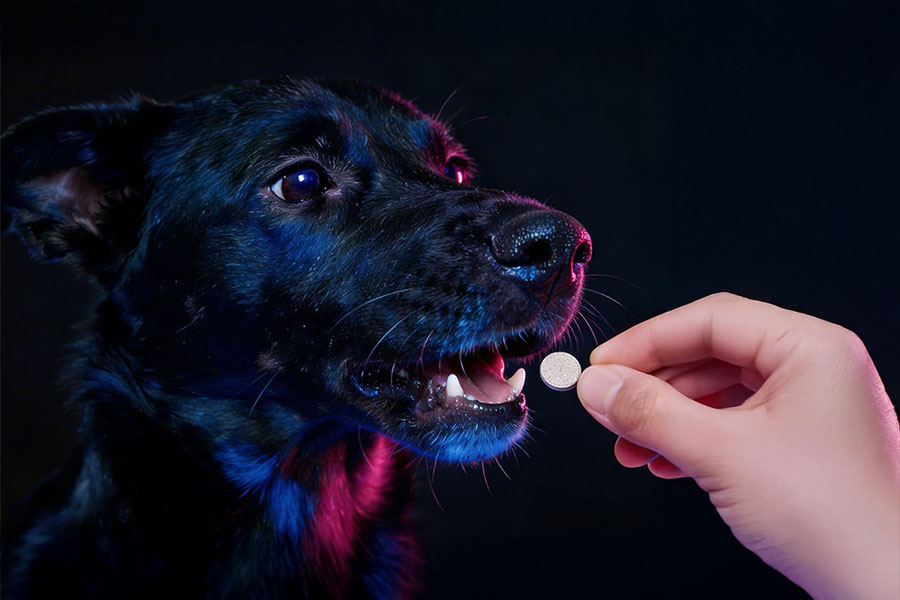 Lyophilization, also known as freeze-drying, is a material stabilization process which gently but nearly completely removes water from material after it is frozen. This happens through a process called sublimation where ice is converted directly to water vapor by placing the material under vacuum in a specialized chamber.
The pharmaceutical industry has long used lyophilization to stabilize sensitive injectable products such as vaccines and more recently biologic molecules, but its applications certainly extend beyond that. As Animal Health has advanced and new therapeutic modalities enter pipelines, lyophilization may be a tool that enables compliant use of these new therapies and therefore better outcomes.
Freeze-Drying Boosts Stability, Shelf Life, and Logistics
Water activity is one of the biggest enemies of material stability, so removing water is important to inhibiting microbial growth and product degradation. There are several ways to remove water, but not all are suitable for the increasingly sensitive materials that are making their way into new therapeutic pipelines.
Lyophilization significantly slows down chemical and biological breakdown, thereby preserving the potency of vaccines, antibodies, probiotics, and other sensitive therapeutics. For example, freeze-dried veterinary vaccines have been shown to retain their potency for over 2 years at refrigerator temperature with minimal loss in activity, and were projected to have a shelf life of ~6.6 years at 2–8 °C. This kind of longevity is hard to achieve with liquid formulations and highlights why lyophilization is so valued in vaccine production.
Beyond extending shelf life, freeze-drying also simplifies storage and shipping. Dried products are typically stable at ambient temperatures, reducing or even eliminating the need for strict cold-chain transportation. This is especially important in veterinary medicine, where treatments may need to reach farms or clinics in remote areas.
While lyophilization has utility for and is commonly associated with injectable formulations, it has potential far beyond that when applied to therapies destined for oral dosing. The ability of the technology to preserve the potency and stability of a wide range of active ingredients without applying heat and shear forces that may damage them makes it an ideal tool for formulators.
Formulating an effective and stable oral formulation is only half the battle in Animal Health, however. Formulating it into a form that creates an extremely easy human to animal interface to improve compliance can be critically important in generating desirable therapeutic outcomes.
Moreover, converting liquids into lightweight dry forms means less weight and volume for shipping. We noted a dramatic example during efforts to oralize vaccines: by freeze-drying doses into tablets instead of liquid vials, it became possible to pack nearly 2 million doses per shipping container, compared to only a few hundred thousand injectable doses in the same space. This kind of volume efficiency can lower distribution costs and improve access to medicines.
The Therapeutic Compliance Challenge in Veterinary Medicine
Stability means little if a medication isn’t actually administered as prescribed. Therapeutic compliance — getting owners or animal caretakers to give medications correctly and consistently — is a major challenge in veterinary medicine. Unlike human patients, animals can’t be reasoned with about taking their medicine, and this often leads to missed doses or premature discontinuation of treatment.
Studies have shown that nearly half of pet owners do not fully comply with medication instructions for their animals. Reasons vary: sometimes owners struggle to administer pills or liquids to a resistant pet, or they were never shown proper techniques by the veterinarian. About 33% of dog owners reported difficulty giving medications, frequently due to pets refusing or spitting out the dose. The complexity of the dosing regimen (for example, multiple pills per day or lengthy courses) can further reduce adherence.
These compliance problems can seriously impact health outcomes. Erratic or incomplete dosing often leads to therapeutic failure, prolonged illness, or even the emergence of antimicrobial-resistant infections if antibiotics aren’t finished properly.
In other words, a treatment is only as good as the degree to which it’s actually given. Ensuring high compliance is critical for successful outcomes in veterinary care, just as it is in human medicine. This is driving veterinarians and animal health companies to seek solutions that make administering meds to animals easier, safer, and more foolproof.
How Lyophilized Formats Enhance Compliance
The format of a medication — its taste, form factor, and ease of use — plays a huge role in whether owners can stick to the prescribed regimen for their pets. One dose form technology, orally disintegrating tablets, or ODTs, holds promise. These are tablets produced through lyophilization and offer several compliance-friendly advantages:
- Palatability: Freeze-drying can preserve and even concentrate flavors and aromas. This has been observed in the pet food world, where freeze-dried treats are known for intense flavor and aroma, making them highly palatable to pets. In situations where ingredients are bitter tasting formulators have additional tools at their disposal to improve palatability.
- Ease of Administration: Lyophilized oral dose forms can be designed to dissolve quickly in the mouth without water. This fast-dissolving property means a pet doesn’t have to swallow a large pill or endure a bad-tasting liquid that may drip out of the mouth during administration. The tablets are also mucoadhesive, meaning they stick to the moist surfaces in the animal’s mouth preventing the tablet from being dropped or spit out once administered.
- Precision Dosing: Each ODT tablet is a precisely measured dose made under strict quality control. This eliminates the guesswork or errors that can occur when owners have to measure out powders or liquids at home.
- Convenience: The room-temperature stability of lyophilized products means that pet owners can keep the medicine in their cabinet or take it on the go — no refrigeration reminders or complex handling required.
LyoPastille®: A Freeze-Dried Oral Format to Boost Compliance
OFD Life Sciences has taken these insights and developed the patented LyoPastille® platform, a novel lyophilized oral dosage form specifically aimed at improving compliance and broadening the possibilities of veterinary therapeutics. LyoPastille is an ODT dosage form with broad possibilities, able to deliver drugs, vaccines, or nutrients in a pet-friendly way.. The active ingredient can even be co-lyophilized with flavoring agents to enhance palatability, improving acceptance in even hard-to-dose animals.
With over 60 years of freeze-drying expertise, OFD Life Sciences supports partners looking to transition to more stable, compliance-focused dosage forms. Our team collaborates across formulation, process development, and scale-up to ensure each product is optimized for both performance and manufacturability. If you’re exploring how lyophilization or the LyoPastille® platform could support your veterinary pipeline, read more or contact us to start a conversation.